
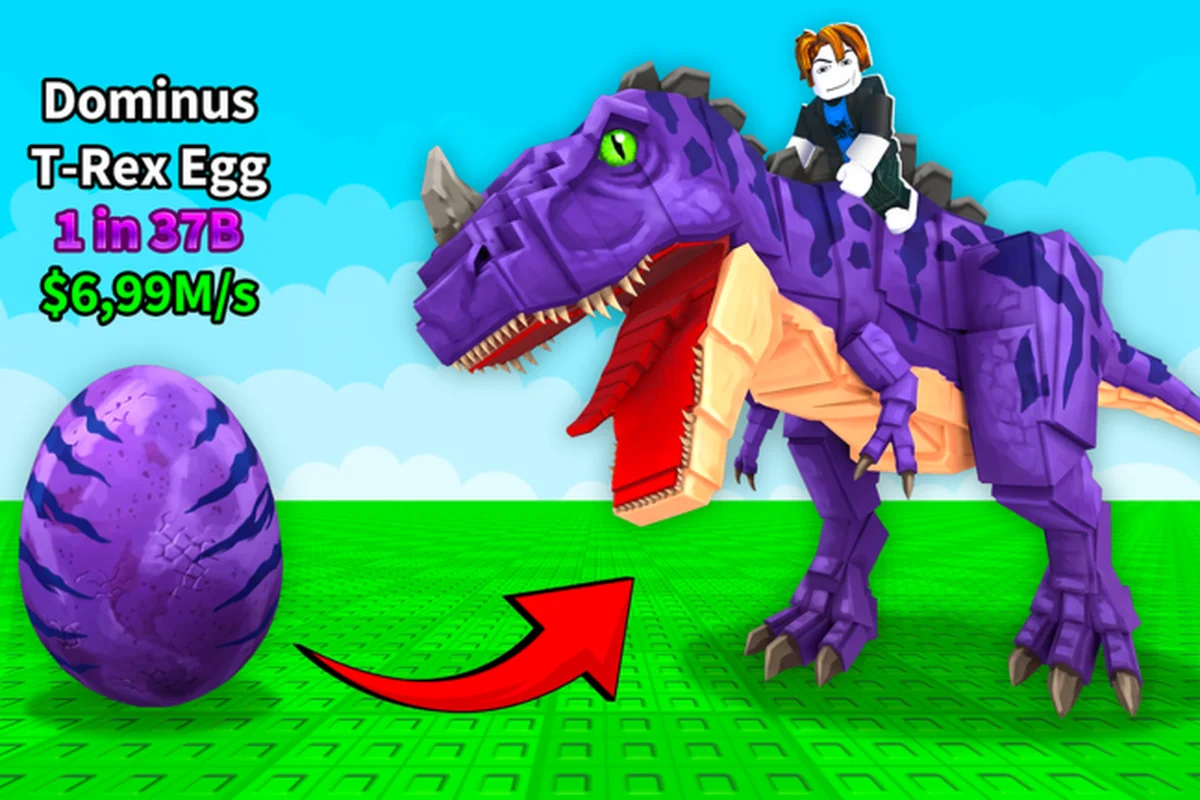
Ride a Dino is built around a single, repeatable loop — discover a hidden egg, hatch a faster mount, ride it to harder-to-reach eggs, mutate it to push speed further, and fill out your collection. Because every step feeds the next, the speed meta is really a question about how to squeeze the most movement value out of every layer at once. This guide maps the current ride a dino speed meta using only what the developer has published, breaks down the role of hatching, riding, and mutating, and answers the most common speed questions players are asking right now.
A quick note before we start: as of 2026-10-18, the official Ride a Dino page does not publish named dinosaur species, rarity tiers, mutation names, or numeric speed values. Anything beyond the loop and one documented game pass (Infinite Radar) is community inference. Treat all strategy here as a framework, not a fixed ladder.
How the Speed Loop Actually Works
The ride a dino speed meta is easier to reason about when you stop thinking of it as "how fast is mount X" and start thinking of it as four stacked layers. The Dino Riders! group page is the verified developer account (Robots_Devv), and the description on the official game page condenses the loop into five steps that every speed decision has to feed back into.
The Four Layers That Stack
Every speed gain in the game comes from one of four stacking sources — mount baseline, hatching upgrades, riding pace, and mutation boosts — and the ride a dino speed meta is really about ordering them so each layer compounds the last rather than wasting rolls on a mid-tier dino you plan to replace anyway.
| Layer | What It Does | Where It Comes From | Can It Stack? |
|---|---|---|---|
| Mount baseline | The raw speed of the dino you hatched | Egg rarity at hatch time | Yes, replaced when you re-hatch |
| Hatching upgrades | Rolling a "better speed" outcome on a new egg | Exploration, egg tier reached | Yes, additive on top of baseline |
| Riding pace | How fast you actually traverse the map | Mount speed + rider input | Compounds with each layer |
| Mutation boosts | Extra speed applied to an already-owned dino | The mutate action | Yes, this is where stacking matters most |
The first two layers are set the moment an egg hatches. The third layer is mostly your play — a faster mount only helps if you actually use it to chase the next egg instead of wandering. The fourth layer, mutation, is the one players most often misunderstand, and it is the focus of most ride a dino speed questions.
Why "Better Rarity" Is the Real Speed Lever
The official page is explicit that eggs hatch into dinosaurs with "better speed and rarity." Speed and rarity are mentioned together, which strongly suggests that higher-rarity hatches are the primary way to raise the speed floor. There is no published rarity tier list — the developer has only said "better rarity" — so the practical takeaway is simple: the eggs that take longer to reach tend to hatch into the mounts that move the fastest.
That single observation is the spine of the ride a dino speed meta. Egg access is gated by mount speed. Mount speed is gated by egg access. The loop is self-reinforcing, and the only way to break the cycle is to spend more time on the explore-and-ride side, not the hatch-and-idle side.
Stacking Speed: Eggs, Mounts, and Mutations Together
The phrase ride a dino does mutation stack speed is one of the most-asked questions in the community right now, because the loop description says mutations "boost speed even more." The word "more" is doing a lot of work there — it implies the mutation is added on top of an existing speed value rather than replacing it.
How Mutation Stacking Reads From Official Text
The official about-text says: "mutate a mount so its speed climbs higher still," and the phrasing is doing quiet but important work for anyone optimizing a ride a dino speed build. "Boost" frames mutation as a multiplier-like effect on top of your base dino speed stat, while "even more" locates that bonus on a relative scale rather than an absolute one — so a mutation layered onto an already-fast mount yields more raw movement speed than the same mutation on a slower one, which is why mutation priority is inseparable from mount selection.
-
"Even more" implies mutation is an additive layer, not a substitute for hatching a better mount.
-
"Your dinosaurs" implies mutation is applied to a specific owned dino, so the choice of which dino to mutate is itself a speed decision.
We don't know whether the game treats mutation as a flat percent boost, a fixed bonus, or a random roll, and the developer has not published any mutation names. What we do know is that mutating a faster mount gives you more "even more" than mutating a slow one, because the underlying speed is higher.
A Practical Stacking Order
Because nothing is published numerically, the most defensible stacking framework is a process order rather than a stat sheet. The following table walks through how each layer feeds the next, in the order that consistently produces the best ride a dino speed outcomes based on player reports.
| Step | Action | Speed Outcome | Why It Matters |
|---|---|---|---|
| 1 | Hatch your first few eggs at the easiest spawn | Low baseline speed | Establishes a starter mount to explore |
| 2 | Ride to harder-to-reach egg clusters | Mid-tier speed baseline | Unlocks the next rarity band |
| 3 | Hatch from those higher-tier eggs | Higher baseline + better rarity | The single biggest jump in the loop |
| 4 | Mutate the highest-rarity dino you own | Additive boost on the best baseline | Maximizes the "even more" effect |
| 5 | Ride the mutated dino to the next egg tier | Stacked speed for new access | Loop restarts from a higher floor |
This is also why the ride a dino mutation meaning guide is worth reading alongside this one — the decision of which dino to mutate is the same decision as which dino to invest the rest of your loop into.
Speed Optimization When the Game Doesn't Give You Numbers
Ride a dino speed optimization is a strange topic to write about, because the developer has not published a single numeric value — no MPH, no percentage, no drop rate, no hatch odds. The 2026-10-18 snapshot of the game shows about 2.57 million visits, roughly 27,951 favorites, and around 2,490 concurrent players, which tells us the loop is engaging enough to retain a real audience, but says nothing about how fast any given dino actually moves.
That gap between what the game shows and what players want to know is where the ride a dino speed meta lives, and the visit and favorite counts confirm the playerbase is large enough to build a community knowledge layer around it. Optimization here therefore means process design, not stat tuning: a rider who picks a repeatable route, records in-game travel times with a stopwatch between two map landmarks, and compares those deltas across patches will outpace a player who just mutates blindly. The bottleneck is measurement discipline, because every speed claim that enters the meta has to be reproducible across the same dino tier and the same terrain segment to be worth trusting.
Variables You Can Actually Control
Because the developer never publishes numeric values, the optimization surface for ride a dino speed meta is limited to categorical choices — which egg cluster, which mount, which mutation target, whether to buy Infinite Radar, how long to grind — rather than tunable numbers like "+12% ride speed per mutation" or "X% chance per hatch." The table that follows catalogs every documented lever a player can pull, the binary or directional choice each lever represents, and the speed outcome each one pushes, so you can see at a glance where the real gains hide instead of chasing stats the game simply does not expose.
| Lever | What You Choose | Speed Direction | Confidence |
|---|---|---|---|
| Egg cluster pursued | Easier vs. harder-to-reach eggs | Higher tiers = higher speed | High — implied by official text |
| Mount used for travel | Slow starter vs. fast mid-tier | Use the fastest you own | High — directly from "ride faster dinos" |
| Mutation target | Random vs. best-owned dino | Best-owned maximizes stacking | Medium — inferred from "your dinosaurs" |
| Radar use | Manual scanning vs. Infinite Radar | Faster egg acquisition = more hatches | High — Infinite Radar is documented |
| Session length | Short play vs. long explore | More time = more egg rolls | High — exploration is the only progression source |
The Infinite Radar game pass (productId 3716208223) is the only documented paid advantage in the experience, and its official description is "A radar you can use forever. Always finds the nearest egg." That single sentence matters for the speed meta because egg acquisition is the bottleneck — every other layer in the loop is downstream of finding eggs. If the game has any time-sink, it is the gap between "I want a faster dino" and "I am holding the egg that produces one." Infinite Radar compresses that gap. The ride a dino new gamepass breakdown goes deeper on whether it is worth the spend.
What "Optimization" Means Without Numbers
Most ride a dino speed optimization content elsewhere on the web falls into two traps: it either invents numbers, or it imports mechanics from a similarly-named but different game. The Roblox platform hosts multiple titles with overlapping names, and community videos about a different "ride a dino" experience often include species lists, Divine rarities, and named mutations that this game has not published. Any optimization advice that includes a concrete MPH or a named mutation tier should be treated as belonging to a different game until verified.
The honest optimization framework for this title is therefore: treat every claim that is not verifiable in the current patch notes as folklore, and build your ride a dino speed meta around the two mechanics the developer has actually published — mount move speed tiers and mutation stacking on a single equipped mount. Because the game has not released a base MPH per species, the only legitimate optimization axis is the stacking curve on the dino you ride most, which means a mid-tier species with two mutations will outpace a top-tier species with no mutations on the same map. Optimization is the work of reducing time-between-eggs on the active loop, not chasing a number from a different Roblox title.
-
Spend more time exploring than waiting — the loop only progresses when you are moving.
-
Use your fastest mount to chase the next egg, not to flex — speed you do not spend on access is wasted.
-
Mutate the dino you will ride the most, not the dino you like the most — stacking is highest when the underlying baseline is high.
-
Treat the Infinite Radar pass as a time-saver, not a power boost — it removes a search tax, not a cap.
How to Read a Speed Decision in Real Time
The ride a dino speed questions that show up in community threads tend to fall into three categories: which egg to chase, which dino to ride, and which dino to mutate. Because the game has not published species or tier names, the only way to answer those questions without inventing is to translate each one into a process question.
Translating "Which Dino Is Fastest?"
A player who asks "which dino is fastest?" is really asking: which owned dino should I ride right now to reach the next egg cluster fastest? The answer, based on the official loop, is: whichever one hatched from the highest-rarity egg you have so far acquired, plus any mutation you have already applied. The speed meta is local, not global — your fastest dino is the one at the top of your stack, not a fixed ladder.
The ride a dino dino ranking criteria guide goes deeper on how to judge a mount on speed × rarity × mutation payoff without needing species names, but the short version for the speed meta is this: base speed scales with egg rarity tier, each applied mutation adds a flat multiplier on top of that base, and the ranking criteria multiplies those two numbers together to surface the actual fastest rider on your roster — which is why a mid-tier dino with three stacked speed mutations will outrun a higher-rarity mount with zero investment in your personal loop.
Translating "Should I Mutate Now?"
The mutate action is a permanent decision because it is applied to "your dinosaurs" — a specific owned creature. If you mutate your current fastest mount and a better one hatches next session, the mutation is still on the old one. That is why the ride a dino speed meta treats mutation as a final step in a session, not a first one. A good rule of thumb, drawn from the stacking table above, is: mutate only after you have hatched from the highest-rarity egg you can currently reach, and only on the dino you intend to keep riding.
Translating "What Should I Spend Robux On?"
The game has exactly one documented game pass — Infinite Radar — and no developer products, no badges, and no redeem-code system. That makes the Robux decision unusually simple. If the bottleneck in your session is finding the next egg, the pass is the only verified way to shorten that step. If the bottleneck is mutation outcomes or hatch rolls, no published purchase addresses it.
Where the Speed Meta Will Probably Move Next
Ride a Dino launched on 2026-09-18 and the most recent recorded update was 2026-10-12, which is roughly a month of public history. For a Roblox Simulation/Tycoon title, that window is still early — the developer is still tuning the loop, and the published description has not yet expanded beyond the five-step skeleton.
Three things are worth watching in the published description of the speed meta, because each one would force a re-read of the mutation-stacking and tier-priority conclusions above. A developer posting named rarity tiers — for example, Common / Rare / Epic / Legendary — would collapse the current "rarity band" shorthand into hard breakpoints, and the practical advice for ride a dino speed optimization would have to be re-tiered against those new cutoffs instead of the current qualitative gradient.
-
Rarity tier visibility. The game says "better rarity" but does not name tiers. If the developer publishes tier names or colors, the speed discussion will move from "rarity band" to specific named bands, and the stacking table above will need a re-read.
-
Mutation surface area. Right now the developer only says mutations boost speed. If mutations begin to affect visuals, collection value, or stacking rules, the answer to ride a dino does mutation stack speed will need to be split into "stacks with what" rather than treated as a yes/no.
-
Egg pool rotation. The official text says harder-to-reach eggs produce better hatches. If the map changes, egg access tiers will shift, and the practical ride a dino speed optimization advice above — chase the highest tier you can reach — will still hold, but the specific clusters worth chasing will move.
None of those shifts have happened yet — the published description still reads "better rarity" without named tier cutoffs, the mutation system still only advertises a generic speed boost, and the egg-pool text still ties harder-to-reach eggs to better hatches without naming which maps drop which clusters. Until the developer moves on any of those three fronts, the ride a dino speed meta framework laid out above — mutation stacking within the current rarity bands, tier priority by reachability, and the egg-chase heuristic — remains the most defensible read of the live game state as of the 2026-10-12 update.
Frequently Asked Questions
Does mutation stack with speed in Ride a Dino?
Yes, based on the official description, which says mutations "boost speed even more" — meaning the boost is additive on top of your existing mount speed. The higher the baseline speed of the dino you mutate, the larger the practical gain, so always mutate the fastest mount you currently own rather than a starter.
What is the best way to optimize speed without spending Robux?
Spend more of your session riding your fastest mount toward harder-to-reach egg clusters, because those eggs hatch into the higher-rarity mounts that raise your speed floor. The loop is self-reinforcing, and the only published progression source is exploration, so time-on-mount is the only free optimization.
Is the Infinite Radar game pass worth it for the speed meta?
It is the only documented game pass in the experience, and it directly shortens the time between sessions and your next egg — which is the bottleneck of the entire speed loop. If your sessions are limited by search time rather than by mutation or hatch luck, the pass is the single most efficient speed-related purchase available.
How does rarity affect speed in Ride a Dino?
The official page explicitly ties hatching to "better speed and rarity" as a pair, which implies higher-rarity hatches are the primary source of baseline speed gains. Because the developer has not published named rarity tiers, the practical rule is to chase the hardest-to-reach eggs you can and mutate the resulting hatches.
Why do my speed results feel random across sessions?
Speed outcomes depend on which eggs you reach and which mutations you apply, both of which are gated by exploration. If you replay the same easy egg cluster every session, your speed floor will plateau — the only published way to raise it is to ride further into the map and access harder-to-reach egg tiers.