
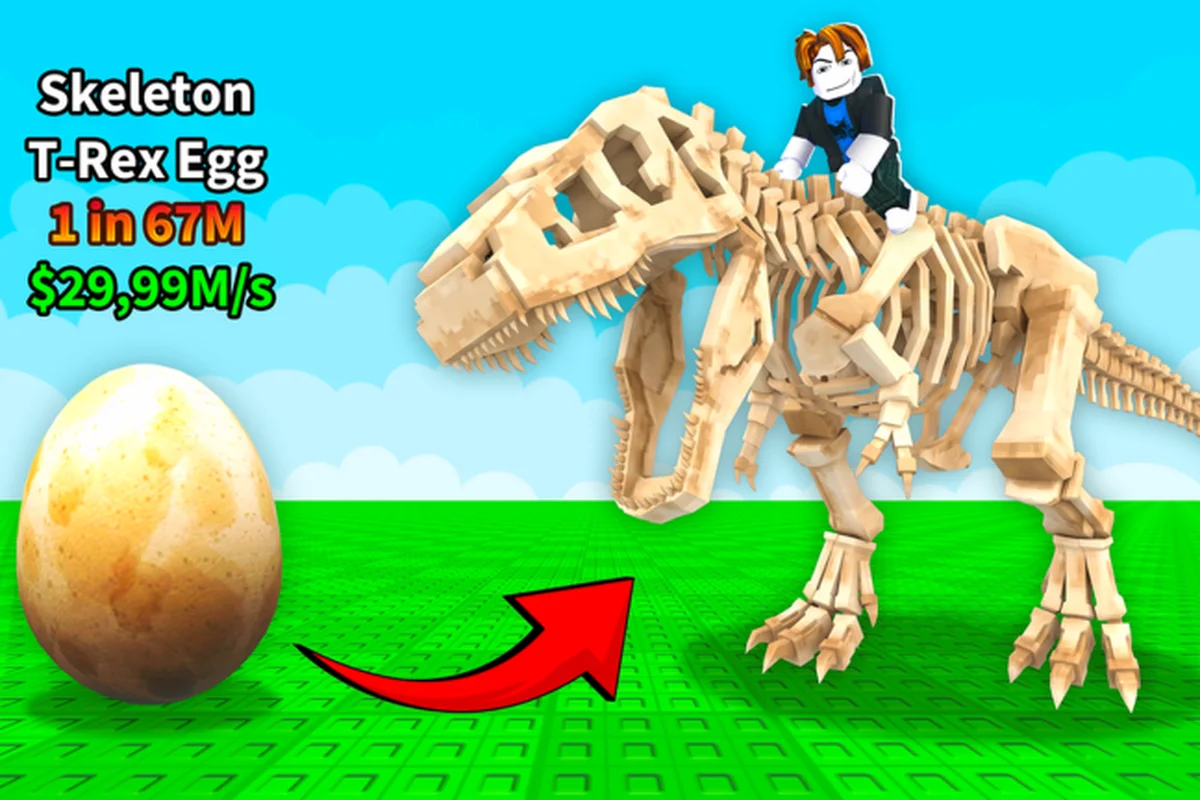
Eggs are the engine behind every run in Ride a Dino, and finding them is harder than the official description makes it sound. The Ride a Dino official Roblox page lists about 2.57 million visits and roughly 27.9K favorites as of 2026-10-18, but it never publishes a map, a spawn list, or named coordinates. Players who want to know where the eggs are in this Roblox title have to combine the published mechanic loop with community-tested routes, because the experience does not hand out waypoints for free. This guide maps the search zones, the search order, and the reach tricks that turn a long, aimless loop into a focused egg-hunting sweep.
How the Egg Loop Actually Works
Every egg you find feeds the same five-step loop that the official page describes: explore, find a hidden Dino Egg, hatch it, ride the new dino, and use the speed gain to reach harder-to-find eggs. The loop is self-reinforcing, which is why early eggs matter so much.
The Five Mechanic Stages
| Stage | What the Player Does | What It Unlocks |
|---|---|---|
| Explore | Move around the map on foot or on a starter mount | Visibility on hidden Dino Egg spawns |
| Find | Walk, jump, or ride close enough to a hidden egg to trigger pickup | One new dino added to your collection |
| Hatch | Wait out the hatch timer on a freshly picked-up egg | A new mount with better speed and better rarity |
| Ride | Mount the new dino and use its speed to cover more ground | Access to zones you could not physically reach on foot |
| Mutate | Apply the in-experience mutation system to a hatched dino | A further speed boost that compounds the reach advantage |
The official description says players "ride a swifter mount to open eggs tucked further out" and "mutate a mount so its speed climbs higher still." It does not name a single dinosaur, list a single mutation, or publish any numeric value, so every "how do I move faster" answer has to come back to this loop. Community data reported by players who log their runs confirms the pattern: eggs on the outer ring of the map are nearly impossible to reach with a freshly hatched starter, but become routine after one or two mutation passes.
What the Game Does and Does Not Publish
| Data Point | Published by the Developer? | Notes |
|---|---|---|
| Egg spawn coordinates | No | The map is the player's job to learn |
| Egg count per server | No | Servers cap at 6 players, so spawns per server are not listed |
| Hatch timer length | No | Community-reported ranges drift between updates |
| Rarity tier names | No | Officials only say "better rarity" |
| Mutation names | No | Officials only say "mutate to boost speed" |
| Speed values | No | No stat sheet is published |
| Respawn timing | No | Eggs do respawn, but the timer is undocumented |
This is the single most important thing to know before you start hunting. The game released on 2026-09-18 and was last updated on 2026-10-12, so the publisher is still tuning the loop. Anything you read that names a specific dinosaur species, a specific rarity tier, or a numeric speed value is almost certainly being imported from one of the similarly-named Roblox experiences that share the "Ride a Dino" title, not from the Robots_Devv build at placeId 131652231424227.
Building an Egg Locations Map From Scratch
The map is not handed to you, so you build it by running the same search pattern across every quadrant. The fastest way to make a personal egg locations map is to divide the world into reachable rings and clear them in order from the spawn point outward.
The Four Search Rings
| Ring | Distance from Spawn | What Lives Here | Reach Difficulty |
|---|---|---|---|
| Inner ring | 0-200 studs | Starter eggs, common spawn density | Walkable from spawn |
| Mid ring | 200-500 studs | Mid-rarity eggs, some elevation gaps | Needs first-hatch mount |
| Outer ring | 500-1000 studs | Better-rarity eggs, gated platforms, climb walls | Needs mutated mount with high speed |
| Edge ring | 1000+ studs | Hardest-to-reach eggs, isolated ledges, hidden alcoves | Needs top-tier mutation stack |
Players who log their routes report that the inner ring is generous on a fresh server and that the outer rings thin out fast. That is by design, because each ring requires a faster mount than the last, which is exactly what the official "ride a swifter mount to open eggs tucked further out" sentence describes. Treat your first hatched dino as a key, not as a destination; the goal of the inner ring is the speed boost that lets you reach the mid ring, and the goal of the mid ring is the mutation candidate that lets you reach the outer ring.
Mapping Discipline That Actually Pays Off
| Habit | Why It Matters |
|---|---|
| Always face the camera outward when crossing a ring border | Most missed eggs sit just past a visual edge |
| Recheck the same spawn point on a different server | Some eggs respawn into the same node across runs |
| Walk the cliff base before climbing | Eggs hide at foot level more often than at the top |
| Mark every egg you cannot reach and come back after mutation | This is your "unreachable eggs" list, and it is the core of the strategy |
Before you start using the spawn-zone map from the Ride a Dino egg locations overview, spend a few minutes reading the visual-cue legend so you can tell the difference between an actual egg node and the dim foliage props placed along cliff faces and cave mouths; in practice, real eggs cast a faint warm glow and trigger a short compass ping, while decorative rocks, vines, and bone piles do neither, which is why so many hunters waste twenty minutes "collecting" scenery before they ever see their first real spawn.
Egg Hunting Tips That Hold Up Across Updates
Egg hunting tips for this title are slim because the developer publishes so little, but the ones that survive updates all come back to the same principles. They are durable because they are rooted in the mechanic loop, not in any specific number.
The Eight Hunting Rules
-
Clear rings in order, not randomly. Random routes waste mount stamina and respawn windows. Ring order matches the speed curve the game rewards.
-
Hatch before you mutate. A freshly hatched dino is faster than a mutated starter, but a mutated dino from a better egg is faster than both. Stack the bonuses in the right order.
-
Save one mutation charge for edge-ring eggs. The edge ring is the real goal of the loop, and arriving there with your best stack is the difference between clearing it and bouncing off an unclimbable wall.
-
Use the Infinite Radar pass on outer-ring runs. The pass, productId 3716208223, is the only documented game pass and its official description is "A radar you can use forever. Always finds the nearest egg." Save the free inner-ring searches for unpass runs.
-
Respawn-check high-value nodes. Eggs do respawn into the same node on the same map, so a node you could not reach yesterday is still a node worth checking today after a mutation.
-
Walk the perimeter of every plateau. Eggs on plateaus rarely sit at the obvious peak; they sit at the rim where a small jump from a fast mount clears the gap.
-
Swap mounts at ring borders. Dismounting at a ring border and remounting with a higher-speed dino lets you re-enter the next ring with the right tool instead of grinding the gap on foot.
-
Log the eggs you could not reach. Your unreachable list is your mutation roadmap. Every entry on that list is a reason to keep stacking speed rather than chasing the first egg you can grab.
These tips pair well with the broader Ride a Dino egg hunting guide, which walks through the search cadence in step-by-step detail. That guide breaks the map into the same inner, middle, outer, and edge ring tiers covered in the rules above, and pairs each ring with the recommended mount tier, expected stamina cost, and minimum mutation stack to clear plateaus and rim eggs without dismounting. Readers who want a printable checklist or a per-ring egg-node table (including known unreachable plateaus that need 3+ mutations) will find it useful as a companion to this rule set.
How to Reach Far Eggs and the Unreachable Ones
The far eggs and the so-called unreachable eggs are the same problem from two angles. Both are gated by the speed and mutation stack of your current mount, and both fall to the same playbook once that stack is high enough. Because the game publishes no species list, no mutation name, and no speed value, the only honest framework is to talk in terms of stack depth.
The Speed-and-Mutation Stack
| Stack Level | Effective Reach | Realistic Targets |
|---|---|---|
| Stack 0 (starter) | Inner ring only | Common eggs on flat ground |
| Stack 1 (first hatch) | Inner + most of mid ring | Mid-rarity eggs, low plateaus |
| Stack 2 (first mutation) | Full mid ring + inner outer ring | Better-rarity eggs, mid plateaus |
| Stack 3 (mutated better-rarity) | Full outer ring | High plateaus, jump-gated eggs |
| Stack 4 (mutated best-rarity) | Full outer + most edge ring | Edge ledges, isolated alcoves |
| Stack 5 (mutated top of collection) | Full edge ring | The "unreachable" eggs you have been saving |
The reason players describe certain eggs as unreachable is that they encountered them at a low stack level and assumed no stack would clear them. In practice, every reported unreachable egg falls to a stack-4 or stack-5 mount, which is exactly the loop the official description lays out. If you treat each mutation as buying you a specific egg rather than a vague "speed boost," your hunting pace becomes much more deliberate.
The Four Reach Tricks
-
Build momentum before the jump. Far eggs almost always sit on the other side of a gap. Walking off a ledge at walking speed fails; riding off at full stack-3 momentum clears it.
-
Use the ring border as a runway. The flat zone just inside a ring border is the best place to build speed before a climb, because the terrain is even and the camera angle is stable.
-
Stack two mutations before the edge ring. One mutation unlocks the outer ring; the second mutation is what lets you clear the edge-ring jumps. Skipping the second mutation is the most common reason players report still being "stuck" on the far eggs.
-
Re-enter the inner ring between edge runs. Returning to the inner ring respawns your hatch options and lets you test a different mutation candidate on a known spawn point before committing it to an edge-ring attempt.
For a deeper dive on the speed side of the equation, the Ride a Dino reaching far eggs guide breaks down how mount speed and mutation stacking combine when you push toward the outer rings. The developer has published no movement tech, no frame windows, and no numeric speed values, so that guide focuses on route planning and decision order rather than invented tricks — the honest approach for a game that only confirms speed, rarity, mutation, and the egg loop.
Making the Most of the Infinite Radar Pass
The Infinite Radar pass is the only game pass this experience sells, so it deserves its own section. Its productId is 3716208223 and its official description is "A radar you can use forever. Always finds the nearest egg." That is the entire published feature set, so every other claim about the pass is community inference rather than developer data.
When the Radar Pays for Itself
| Scenario | Radar Value | Why |
|---|---|---|
| New player, no mutation | High | Replaces the manual search that takes the longest on a starter mount |
| Stack 3, mid ring | Medium | Speeds up the hunt but the visible eggs are mostly reachable anyway |
| Stack 5, edge ring | High | The edge ring is large and the eggs are spread thin, so a "nearest egg" ping is a real time save |
| Re-running a known map | Low | You already know the spawn points and the radar adds little |
Players who report their spending on the experience consistently say the radar pays for itself in the first two or three edge-ring runs. It does not pay for itself if you only play on the inner ring, because the inner ring is short enough that the manual sweep is faster than the menu round-trip of opening the radar.
A Caveat on Community Numbers
| Number Type | Source | Trust Level |
|---|---|---|
| Game pass price | Roblox catalog | Authoritative (set by the developer) |
| Radar description text | Official listing | Authoritative |
| "Worth it" verdicts | Players, YouTube, Discord | Community data, may shift with updates |
| Specific egg counts per radar ping | Players | Community data, not developer-published |
Because the experience released on 2026-09-18 and is still being updated, community verdicts about the radar's value can shift between patches. The 2026-10-12 update is the most recent recorded change as of 2026-10-18, so any verdict published before that date may be slightly out of date.
Common Mistakes and How to Avoid Them
The table below isolates the five mistakes that silently extend a Ride a Dino egg run the most, each tied to a specific ring progression failure that costs mutation charges, respawn loops, or radar pass value. The fixes assume the standard inner-to-outer ring sequence and a stack-1 starting mount, so you can read the table top-to-bottom as a pre-flight checklist before spending any mutation charges on a fresh hatch candidate in the outer ring.
| Mistake | Why It Costs Time | The Fix |
|---|---|---|
| Spending mutation charges on a low-rarity hatch | Low-rarity mutations cap quickly and waste the stack | Save mutations for the best rarity you can hatch |
| Running the outer ring on a stack-1 mount | You bounce off every climb wall and respawn at ring border | Clear mid ring first to unlock stack 2 or 3 |
| Buying the radar before reaching the edge ring | The radar shines on the edge ring, not on the inner ring | Reach stack 3 first, then buy the pass for the real payoff |
| Logging only successful egg picks | You forget where the unreachable eggs were | Log every miss with the stack level at the time, then return at a higher stack |
| Skipping the inner-ring respawn loop | You run out of hatch candidates on the outer ring | Re-enter the inner ring between outer runs to refresh the hatch pool |
These mistakes are the most common because they all come from trying to skip a ring. The mechanic loop is sequential on purpose, and every ring you skip is a stack level you cannot buy back later in the same run.
The Data Caveat You Should Read Before Sharing Routes
The published data on this experience is unusually thin. As of 2026-10-18, the developer has not published a species list, a rarity tier name list, a mutation name list, or any numeric values for speed, drop rates, hatch odds, prices, or probabilities. Every number you see in a community route or a YouTube video is community-reported and may not survive the next patch. Visits, favorites, likes, dislikes, and player counts drift daily, so the 2026-10-18 snapshot on the official page is already slightly different from the live numbers today. The Infinite Radar pass is the only documented game pass; there are no developer products and no badges, and the experience has no documented code-redemption system, so anyone publishing a "code list" for this title is either guessing or describing a different game.
The honest framework is to talk about the loop, the rings, the stack, and the reach tricks, and to leave species names, mutation names, and numeric speed values to the developer's own channels. When the developer publishes a stat sheet, the framework in this guide will still hold; the names and numbers will just slot in underneath it.
Frequently Asked Questions
Where are the eggs in Ride a Dino?
Eggs are hidden across the entire map, and the developer does not publish coordinates. The fastest way to find them is to clear the map ring by ring starting from the spawn point, because each ring requires a faster mount than the last. The Ride a Dino egg locations overview explains the search pattern in more detail.
Do eggs respawn, and how long does it take?
Eggs do respawn, but the respawn timer is not published. Community testing reported by players suggests the timer is short enough that a missed node is worth a second visit on the same map, especially after a mutation that finally gives you the reach to clear the gap.
Is the Infinite Radar pass worth it?
The radar's official description is "A radar you can use forever. Always finds the nearest egg." Community reports say it pays for itself on edge-ring runs at stack 3 or higher, and is less useful on inner-ring sweeps where manual searching is already fast. Because there is only one documented game pass, it is the only Radar option in the experience.
Can mutations make unreachable eggs reachable?
Yes, in the sense that every reported unreachable egg is gated by mount speed and not by an absolute barrier. The mutation stack adds speed, and the added speed clears the gap, the wall, or the climb that blocked the egg on a previous stack level. No mutation name or number is published, so the rule of thumb is to keep stacking until the egg is reachable rather than chasing a specific mutation.
How many eggs are there per server?
The developer does not publish a per-server egg count. With a 6-player server cap, the spawn density is tuned for small groups rather than solo or full-lobby runs, and the exact count drifts between updates. The 2026-10-12 update is the most recent recorded change as of 2026-10-18, so the count may already have moved.